Way back in May, my birthday month, an interesting announcement came across the transom:
Today, Last.fm begins a new chapter as an independent company. Ownership has changed, but the product you use every day has not.
Your account, your listening history, and your data remain exactly where they are. The team building Last.fm is the same. The service continues as normal.
And here’s a few bits of info on the folks that have taken over:
Matt — okspud1
Scrobbling since 2012. 169,468 scrobbles across 11,292 artists, M83, Radiohead, HÆLOS, and Oasis at the top. My single most-played track of all time, though, is Olivia Rodrigo’s “vampire,” 284 plays and climbing, entirely thanks to my daughter. Scroll a little further, and you’ll find Baby Shark and the Encanto soundtrack keeping it company.
Michael — insipidhues
Scrobbling since 2008. 169,800 scrobbles, which is a few hundred more than mine as I write this, a fact he is keen I don’t forget. 8,746 artists, led by 5,462 plays of Björk, then Being Dead, Black Country, New Road, and Danny Brown. Genuinely better taste than the rest of us, and people have been arguing with him in his shoutbox since 2013.
Simon — simonmoran
Scrobbling since 2008. 42,922 scrobbles. Fewer than us two, but 740 loved tracks, more than either of us, so he clearly cares the most. London Grammar, New Order, and Depeche Mode are all-time. Someone told him to “get an avatar and listen to some goddam tunes” back in 2009; seventeen years on, he has half-managed one of those two things.
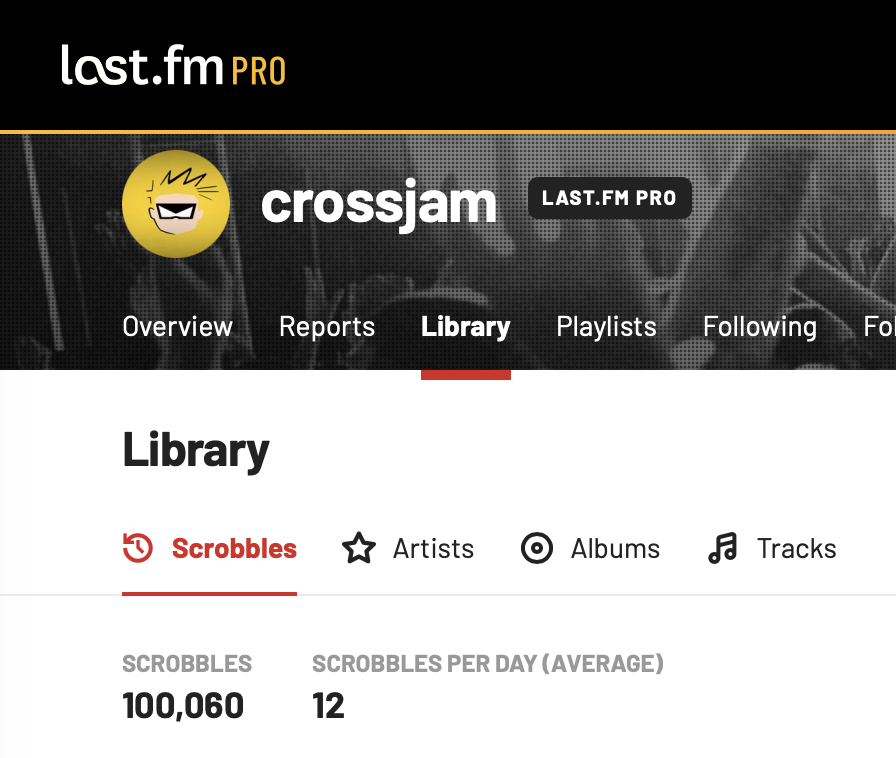
I’m surprised, but not surprised, that I’ve been scrobbling longer than all three, and have 2x the number of scrobbles as one.
Best of luck to the new management. I like having a historical record, somewhat patchy as it is, of a slice of my listening. The recommendation and social features never grabbed me. So I’m not really sure what, if anything should be on the product roadmap now that it’s free of a corporate megalith. Improved stability and availability is always valued. Otherwise, maybe better integration with music cataloging platforms like Discogs and MusicBrainz.


 Built using